Grammar is the greatest joy in life, don't you find?

How do I become an editor? (Part 2)

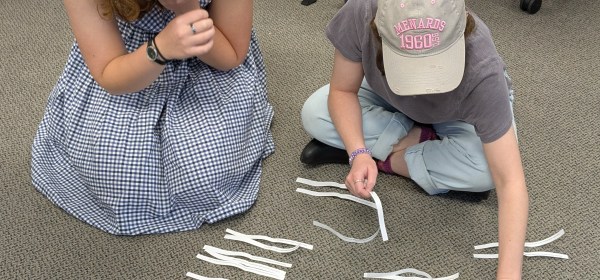
In a publishing house, after the content editor, in consultation with the author, finalizes the manuscript and considers it solid at the big-picture level, the manuscript will move on to a copyeditor.

The copyeditor reads at a more micro level. The macro work has been completed, so the copyeditor focuses on every paragraph, every sentence, every word, every bit of punctuation. She reads closely for sentence construction—looking for dangling or misplaced modifiers, run-ons, lack of parallelism, correct subject and verb forms. He fact checks and queries if something doesn’t make sense. She marks if a transition is needed. He checks spelling, grammar, and punctuation and works to be correct without changing the author’s voice or stylistic choices. (Yes, sentence fragments are often just fine.)
How do I become an editor? (Part 1)

As the assistant professor in the Professional Writing program for the past 15 years, I’ve had several students take my Editing class and end up saying that it was that class that helped them discover what they wanted to do for a living. They’d been casting around, trying to be writers, and realizing that their love for words did not necessarily translate into becoming the next great American novelist. But give them a fresh manuscript to respond to, to make suggested changes on? They were off and running. They discovered that their love for words—both as readers and as writers—helped them be able to consider a manuscript, see the places where it fell short, and make suggestions. They wanted to become editors.

Continue reading

Why Romantasy has a Place in Fantasy

If you are a fantasy lover, you surely have encountered the explosive new subgenre coined romantasy. Barnes & Nobles has even added an aisle dedicated to romantasy titles that have gone viral. As with the insurgence of any new book trend, there is always mixed opinion surrounding what to do with the new genre. Criticism is good, healthy even; however, the criticism I see of romantasy stems from a larger problem, a low view of romance in fantasy as a valid literary concept.

Creating loveable characters isn’t as hard as you think

Great worldbuilding and an exciting plot can only take you so far—if your characters fall flat, readers won’t stick around. That might sound intimidating—creating characters is super important—but not impossible. As you read in this article, I hope you will see that creating characters your readers will love is not as daunting as you think. Allow me to walk you through the process of creating characters your readers will never forget.

PWR major hosts 9th annual Professional Writers Conference

You’re invited to the Taylor University Professional Writers Conference this summer, July 25-26, 2025, right on Taylor University’s beautiful campus. Check out http://www.tupwc.com.

This conference is for all types of writers—beginners who have never been to a conference, teens (16+) who want to explore their desire to write, older folks who finally want to put pen to paper, and even seasoned writers who just want to soak in some training and be around other writers. This is a perfect conference to begin or continue your writing journey.

1 2 3 7